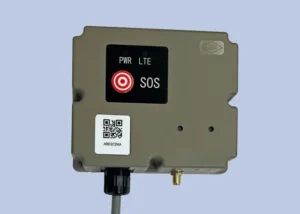
- TOP
- Sustainability
- Environment
-
Environmental Management

Environment
Environmental Management
Promoting Sustainability Management
Basic Policy
We will advance the development and provision of products demanded by a sustainable society. Furthermore, from the perspective of enhancing corporate value over the medium to long term, we will continuously create social value through our business activities and contribute to the realization of a sustainable society.
Climate Change Initiatives
We actively address climate change as a key priority by reducing CO2 emissions.
Indicators and Targets
Indicators and Targets for Assessing and Managing Climate-Related Risks and Opportunities
We incorporate greenhouse gas emission reduction targets approved by the Board of Directors into our Medium-term Management Plan. We identify these targets as key issues for our group, set KPIs, and manage progress.
- 2050 Target: Achieve net-zero greenhouse gas emissions. Switch 100% of electricity required for operations to renewable energy
- FY2030 Target: Reduce Scope 1 and 2 emissions by 46% (compared to FY2017, Japan); Renewable energy ratio for electricity: 30%
- Reduce CO2 emissions (Scope 1, 2) by 22.6% compared to 2022 levels by 2028, achieving an annual reduction rate of 3.7% (including major overseas factories)
Data
Greenhouse Gas (GHG) Emissions Status
| Unit | FY2020 | FY2021 | FY2022 | FY2023 | FY2024 | Scope | ||
| Total GHG Emissions | t-CO2 | 65,372 | 65,250 | 63,879 | 59,329 | 48,959 | Non-consolidated | |
| Scope1 | t-CO2 | 486 | 427 | 376 | 342 | 326 | Non-consolidated | |
| Scope2 | t-CO2 | 12,703 | 12,211 | 11,923 | 11,312 | 10,816 | Non-consolidated | |
| Scope3 | t-CO2 | 52,183 | 52,612 | 51,580 | 47,675 | 37,817 | Non-consolidated | |
| 1.Purchased Products and Services | t-CO2 | 45,780 | 44,563 | 44,958 | 42,071 | 31,318 | Non-consolidated | |
| 2. Capital Goods | t-CO2 | 620 | 1,707 | 1,086 | 976 | 1,808 | Non-consolidated | |
| 3. Fuel and energy-related activities not included in Scope 1 and 2 | t-CO2 | 1,818 | 1,880 | 1,746 | 1,550 | 1,537 | Non-consolidated | |
| 4. Transportation, Delivery (Upstream) *Domestic only | t-CO2 | 1,865 | 2,708 | 1,764 | 1,437 | 1,395 | Non-consolidated | |
| 5. Waste generated from operations | t-CO2 | 55 | 55 | 66 | 42 | 41 | Non-consolidated | |
| 6. Business Travel | t-CO2 | 16 | 28 | 70 | 103 | 171 | Non-consolidated | |
| 7. Commuting by Employees | t-CO2 | 2,029 | 1,672 | 1,890 | 1,496 | 1,548 | Non-consolidated | |
| 8. Lease assets (upstream) | Not applicable | Included in Scope 1 and 2 | Non-consolidated | |||||
| 9. Transportation and Delivery (Downstream) | Not applicable | Our products are intermediate goods. The destination of transportation after processing into final products is unknown, and emissions cannot be reasonably estimated; therefore, this is excluded. | Non-consolidated | |||||
| 10. Processing of sold products | Not applicable | Since the intermediate products sold are processed into a wide variety of final products, it is difficult to track emissions and a reasonable calculation cannot be made. Therefore, this is excluded. | Non-consolidated | |||||
| 11. Use of sold products | Not applicable | Since sold intermediate products are processed into a wide variety of final products, it is difficult to determine emissions and a reasonable calculation cannot be made. Therefore, this is excluded. | Non-consolidated | |||||
| 12. Disposal of Sold Products | Not applicable | As we manufacture intermediate products, it is difficult to track the disposal status of final products; therefore, this is excluded. | Non-consolidated | |||||
| 13. Leased Assets (Downstream) | Not applicable | Not applicable as there are no relevant business activities. | Non-consolidated | |||||
| 14. Franchise | Not applicable | Not applicable as there are no applicable business activities. | Non-consolidated | |||||
| 15. Investment | Not applicable | Not applicable as there are no relevant business activities. | Non-consolidated | |||||
Waste Management
| Unit | FY2020 | FY2021 | FY2022 | FY2023 | FY2024 | Scope | ||
| Total Waste Emissions | t | 51 | 50 | 66 | 44 | 43 | Non-consolidated | |
Water Resource Management
| Unit | FY2020 | FY2021 | FY2022 | FY2023 | FY2024 | Scope | ||
| Water Usage | ㎥ | 681,882 | 710,257 | 909,132 | 793,874 | 690,677 | Non-consolidated | |
Development of Environmentally Considerate and Contributing Products
Our group views fulfilling corporate social responsibility as a key management priority. Guided by our corporate philosophy of "creating good products and contributing to society's development," we are committed to developing environmentally conscious and socially beneficial products.
We develop and provide products that contribute to society, such as sensor development utilizing core technologies like MEMS that lead to low power consumption, product design for ultra-compact resistors considering lightness, thinness, compactness, and short length, products for BEVs and HEVs that contribute to CO2 reduction, and IoT systems that contribute to operational efficiency.
Basic Approach
Product Groups
Environmentally Conscious Products
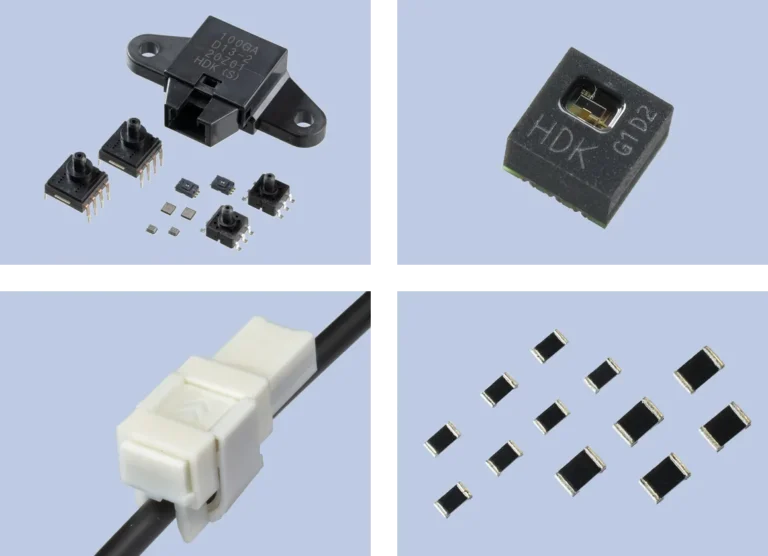
We develop energy-saving, long-life products, including sensor groups achieving low power consumption and long life through core technologies like MEMS, and compact high-power Chip Resistors that achieve the same power consumption as Standard products despite their small size.
- Pressure Sensors
- Humidity Sensor
- Microheaters
- Current sensors
- Compact High-Power Chip Resistors
- Lead-Free Variable Resistor
Environmentally Contributing Products
We develop products that contribute to solving environmental challenges, such as IoT network solutions that help reduce CO2 emissions and improve operational efficiency, and mounting modules used in environmentally conscious vehicles like BEVs and HEVs that contribute to CO2 reduction.
- RFID
- IoT/Network Products
- Ultrasonic Sensors
- Temperature Sensors / Thermistors
- Mounting Modules for Electric Compressors
- Mounting modules for BMS
- Hydrogen sensors